

Skyrockets in your garden
Posted 20 Feb 2026
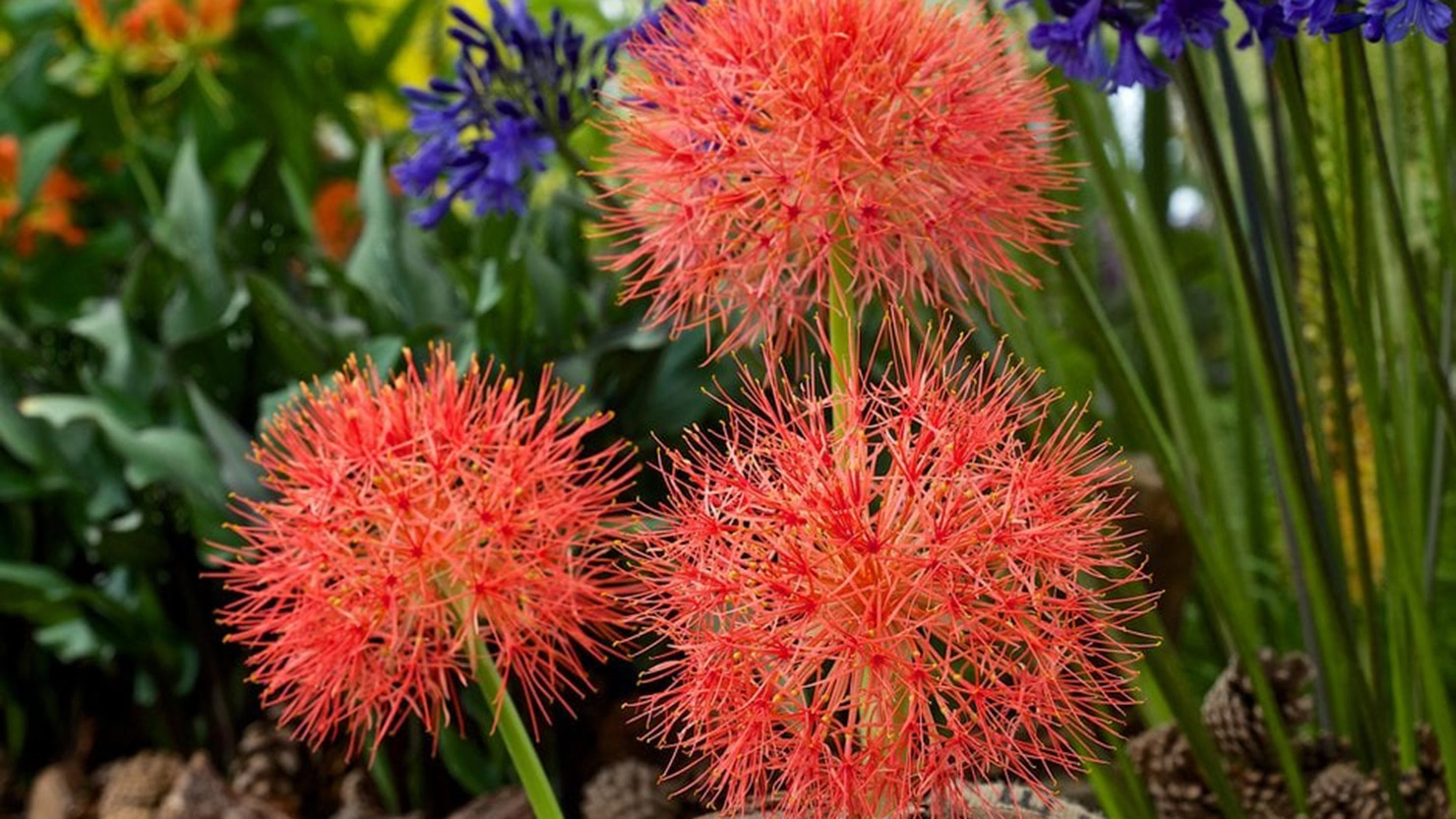
In recent years a small family of bulbs has become more widely available to Australian gardeners.
The bulbs hail from the summer-rainfall areas on the east coast of South Africa, where they inhabit the margins of forested areas, living on rocky ledges. There, the accumulated leaf mould of centuries provides a meagre source of nutrition along with good drainage—conditions that can be replicated in the micro-climates of gardens.
Strictly speaking, the plants are not true bulbs. They are bulb-like in appearance but, over time, develop into a creeping, surface-rooting rhizome with a bulbous terminal point.
Established plants will make a few increases from side nodes on the rhizome towards the base. Most gardeners won’t be concerned with technical niceties such as these, and are simply happy to have and enjoy these fine plants.
Altogether, nine species have been discovered in the sub-tropical and tropical zones of the east coast of Africa, with about four being available from dealers in Australia. When first discovered by plant hunters, the bulbs were described as members of the Haemanthus family, or paint-brush lilies. However, botanists have now set them apart in a separate genus called Scadoxus.
The bulb—continuing with the colloquial term—sits on top of the soil with some roots exposed. Early growth takes the form of a trunk-like structure, sometimes spotted with reddish blotches, topped by a crown of furled leaves. These gradually open to reveal a spreading crown of 7–9 broad, paddle-shaped green leaves, which can be glossy or matte on the upper surfaces. In due course, a separate flower stem grows up alongside the leaf trunk. Both the stem and trunk reach approximately 75–80 cm tall, but in excellent conditions they are known to reach 1 m or more.
The flower clusters are enclosed in thin green spathes, which open to reveal a central boss of a hundred or so scarlet florets with very prominent stamens tipped with gold pollen sacs. The effect is comparable to an exploding skyrocket. Each floret carries a six-petalled flower, narrow in some species and broader in others. The flowering season seems very variable, ranging in my experience from late spring to mid-summer. Individual flowers are followed by a green berry, which can be planted when they become bright red or when they fall. I simply poke each berry under the surface of the soil in which the plants grow.
While these bulbs can be grown in medium to large pots, they look best under the shelter of tall shrubs or trees, where the micro-climate resembles the habitats of their natural localities. Potting mixes should have extra gravel or scoria added at a ratio of one part gravel or scoria to three parts potting mix. Low-nitrogen fertiliser should be used sparingly. Otherwise, the plants have very few pests apart from slugs and snails, and no diseases.